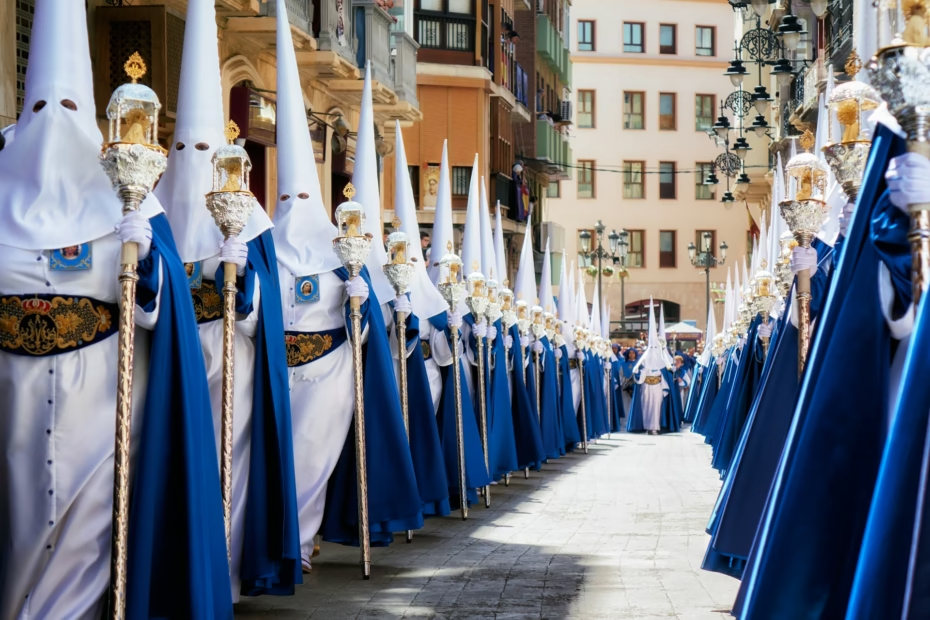
As winter loosens its grip on the Iberian Peninsula each spring, Spain erupts into a spectacle of solemnity, color, and devotion: Semana Santa. Known in English as Holy Week, Semana Santa is one of the world’s most revered and visually arresting religious celebrations. In 2025, the event will occur from Sunday, April 13 (Palm Sunday) to Sunday, April 20 (Easter Sunday), drawing travelers and pilgrims into its ancient rituals.
A Living Tradition
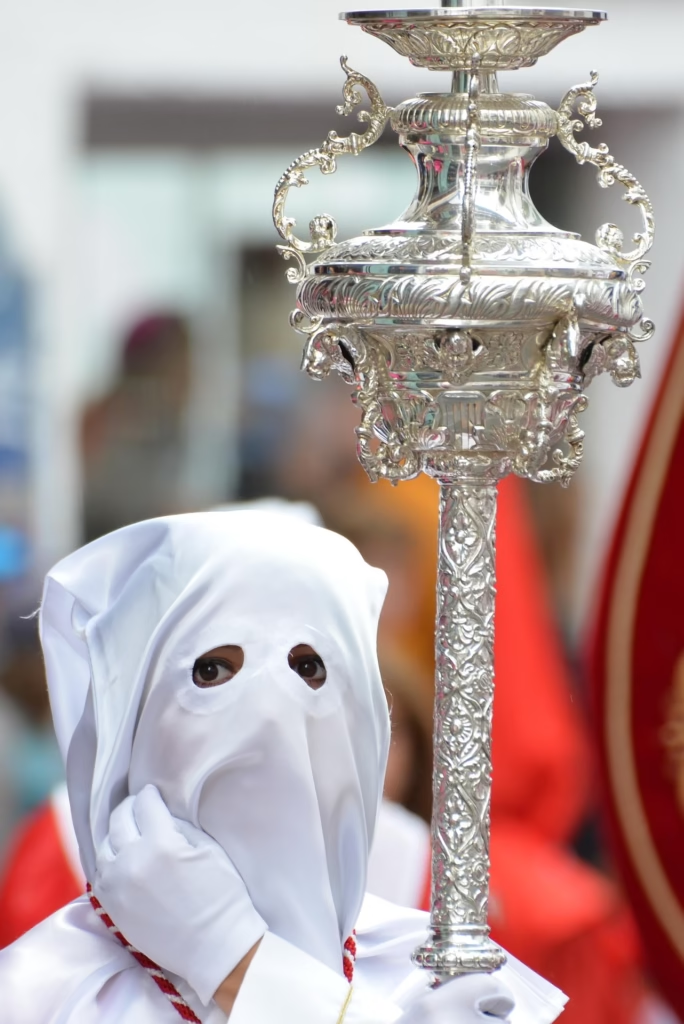
Semana Santa traces its origins to the late Middle Ages and was institutionalized in the 16th century under the influence of the Catholic Counter-Reformation. Its purpose was both didactic and devotional: to bring the Passion of Christ to life for a largely illiterate population through dramatic processions. Today, these processions are carried out by hermandades (brotherhoods), many of which have been active for hundreds of years.
The essence of Semana Santa lies in its processions, in which penitents (nazarenos) dressed in robes and conical hoods walk through the streets—some barefoot, some carrying crosses, many in silence. They accompany baroque wooden floats, or pasos, bearing life-sized statues of the Virgin Mary and scenes from the Passion. Incense hangs in the air; marching bands play mournful saetas and somber drums; candles flicker against ancient stone.
What Is Semana Santa?
Semana Santa is the week leading up to Easter Sunday, commemorating the Passion, Crucifixion, and Resurrection of Christ. But in Spain, it is far more than liturgy. It’s a living theatre, where centuries-old brotherhoods (cofradías) process through the streets carrying elaborately adorned floats (pasos)—massive wooden platforms bearing scenes from the Passion or statues of the Virgin Mary, often centuries old and of museum-level craftsmanship.
These processions are accompanied by penitents in cone-shaped hoods, drummers, candle bearers, and mournful saetas—flamenco laments sung spontaneously from balconies. Each region, even each city, has its own rhythm, symbolism, and aesthetic, ranging from solemn to jubilant, baroque to minimalist.
Semana Santa 2025 Calendar Snapshot
Palm Sunday (Domingo de Ramos) – April 13
Holy Monday to Wednesday (Lunes a Miércoles Santo) – April 14–16
Maundy Thursday (Jueves Santo) – April 17
Good Friday (Viernes Santo) – April 18
Holy Saturday (Sábado Santo) – April 19
Easter Sunday (Domingo de Resurrección) – April 20
Best Places to Experience Semana Santa 2025
Seville
Arguably the most famous celebration, Seville’s Semana Santa is unparalleled in scale and theatricality. The city comes to a standstill as over 50 brotherhoods process through its narrow streets, culminating in a midnight vigil at the Cathedral. For travelers seeking the most iconic experience, Seville in Semana Santa is unforgettable—just be prepared for crowds and book accommodation well in advance.
Málaga
While also profoundly traditional, Málaga offers a more exuberant take on Holy Week. Here, military parades accompany the processions, and figures like the “Christ of the Good Death” are carried by legionnaires. The city’s Mediterranean backdrop and lively atmosphere make it a favorite for those looking for both devotion and vibrancy.
Zamora
For a more austere and intimate experience, Zamora in Castile and León offers one of Spain’s oldest Semana Santa celebrations. The processions here are solemn, often silent, and illuminated only by candlelight. It’s a hauntingly beautiful tribute to medieval religiosity and a haven for those seeking reflective observance.
Valladolid
Valladolid blends artistic excellence with spiritual tradition. Its pasos, sculpted by masters like Gregorio Fernández, are works of Renaissance art in motion. The city is also known for its sacred music concerts and theological lectures, providing a more cerebral immersion into Holy Week.
Cuenca
Set against a dramatic mountain backdrop, Cuenca offers a unique auditory experience with its “Las Turbas” procession on Good Friday. Drums and trumpets echo through the ancient city in a cacophonous and unforgettable ritual. It’s a blend of chaos and reverence, perfectly capturing the emotional complexity of Semana Santa.
Semana Santa food tradition
Andalusia
Seville, Granada, Málaga, Córdoba
Pestiños
These anise-flavoured pastries fried in olive oil and glazed with honey are iconic in Andalusia, especially in Seville and Córdoba.
Ingredients:
- 500 g plain flour
- 150 ml dry white wine
- 100 ml olive oil (plus more for frying)
- Zest of 1 orange or lemon (optional for extra aroma)
- 1 tsp ground aniseed or 2 tsp anise liqueur
- 1 tbsp sesame seeds (optional but traditional)
- 1 pinch of salt
- 250 g honey (for glazing)
- Sugar and cinnamon (optional, for dusting)
Instructions:
Prepare the Dough:
- Infuse the Oil:
Heat the 100 ml olive oil gently in a pan with a strip of orange peel (optional). Let it sizzle slightly but don’t burn it. Remove from heat and let it cool. Discard the peel. - Mix Ingredients:
Combine the flour, sesame seeds, salt, aniseed (or anise liqueur), and citrus zest in a large bowl. Pour in the cooled oil and the white wine. Mix until the dough forms a soft, pliable ball. - Rest the Dough:
Cover and let the dough rest for about 30 minutes at room temperature.
Shape and Fry
- Shape the Pestiños:
Roll out the dough thinly (about 2–3 mm thick). Cut into squares (about 5–6 cm), then fold two opposite corners together and press to seal (forming a twisted bow or small envelope shape). - Fry:
Heat olive oil in a deep pan. Fry the pestiños in batches until golden brown and crisp (about 1–2 minutes per side). Drain on paper towels.
Glaze
- Honey Glaze Option:
Warm the honey in a saucepan (not boiling). Dip the fried pestiños in the warm honey, coating them completely. Let them dry on a rack. - Sugar & Cinnamon Option:
Roll the hot pestiños in a mix of sugar and cinnamon instead of honey for a more straightforward finish.
Serve & Enjoy
Pestiños are best served at room temperature and pair beautifully with sweet sherry, anisette, or coffee. They keep well for a few days in an airtight container.
Torrijas
A must-have during Semana Santa, these are often soaked in sweet wine in Andalusia, rather than just milk, and can be served warm or cold.
Bacalao con tomate
A staple during Lent in Granada and Jaén, where salt cod is simmered in a savoury tomato sauce.
Garbanzos con espinacas
A chickpea and spinach stew, sometimes served with boiled egg, is popular for Lenten Fridays.
Castile and León
Valladolid, León, Salamanca, Zamora
Sopa de ajo
This garlic and paprika soup, often made with poached egg and day-old bread, is traditionally eaten after long night processions.
Potaje de vigilia
This hearty stew of chickpeas, spinach, and cod is common in Castile and León and is often eaten on Good Friday.
Leche frita
A sweet dessert made from thickened milk, coated in flour and egg, then fried and dusted with sugar and cinnamon – very popular in León and Palencia.
Madrid
While Madrid draws culinary influences from all over Spain, during Semana Santa you’ll typically find:
Torrijas
Extremely popular here, with dozens of variations in bakeries across the city.
Bartolillos
These are sweet turnovers filled with custard and often served warm—a traditional Madrileño Easter treat.
Catalonia
Barcelona, Tarragona, Girona
Mona de Pascua
A key Easter Sunday tradition in Catalonia. These cakes are elaborately decorated with chocolate eggs or figures and are traditionally gifted by godparents.
Bunyols de Quaresma
Lenten fritters, often made with sweet dough and flavoured with anise, are found in bakeries throughout Barcelona during the weeks before Easter.
Basque Country and Navarre
Bilbao, San Sebastián, Pamplona
Bacalao a la vizcaína
This dish of salt cod in a red pepper and onion sauce is especially traditional here and is often served with crusty bread.
Garbanzos con bacalao
Chickpeas stewed with cod and sometimes hard-boiled egg or kale is a popular Lenten dish.
Valencia and Murcia
Valencia, Alicante, Cartagena
Mona de Pascua
It is very similar to the Catalan version but more likely to be a sweet bread than a cake, often with a hard-boiled egg baked into the centre.
Arroz con bacalao y coliflor
Rice with cod and cauliflower is a popular Friday meal in Valencia, following the Lenten rules.
Galicia
Santiago de Compostela, A Coruña, Vigo
Empanada de bacalao con pasas
A regional Galician pie filled with cod and raisins. The combination of salty and sweet is typical of Galicia’s Holy Week palate.
Sopa de pescado
Fish soup, often made with white fish, shellfish, and saffron, is commonly served during the week.