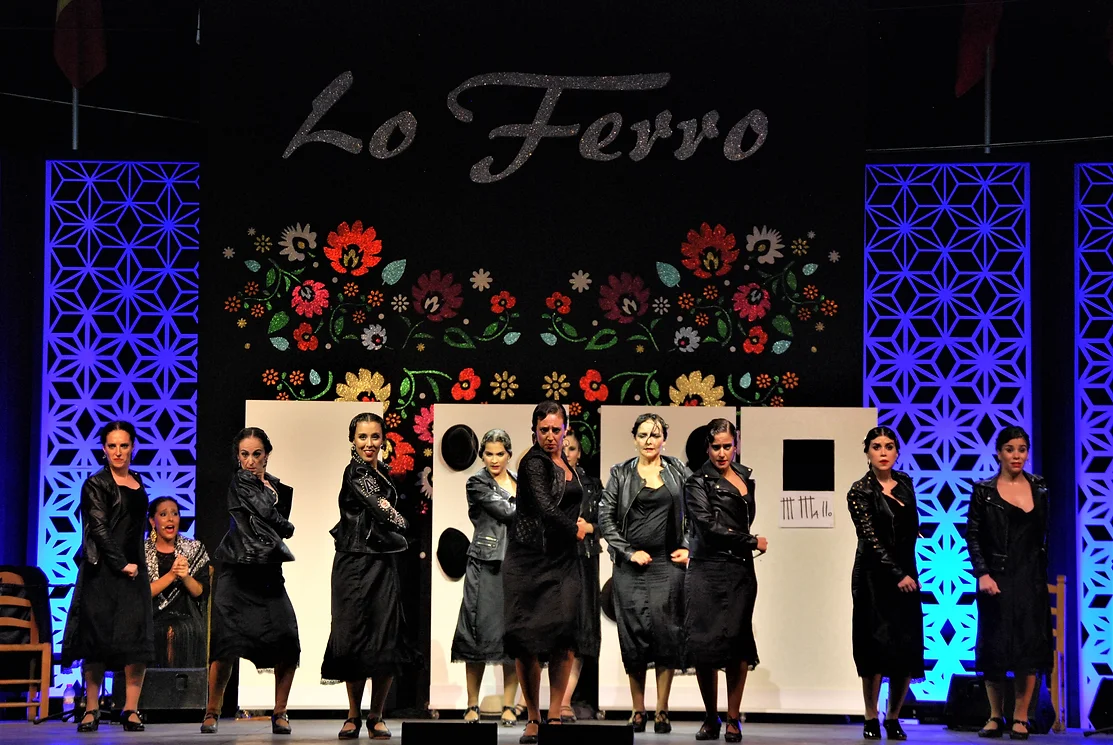
Festival de Cante Flamenco
Cante flamenco, or flamenco singing, is one of the three essential components of flamenco, along with toque (guitar playing) and baile (dance). It originates from Andalusia, in southern Spain, and is deeply rooted in the culture of the Roma (Gypsy) community, as well as influences from Arabic, Sephardic Jewish, and Andalusian folk music traditions.
The Festival Internacional de Cante Flamenco de Lo Ferro is a renowned annual flamenco event held in the village of Lo Ferro, near Roldán, in the Torre-Pacheco municipality of Murcia, Spain.
Established in 1980 by Sebastián Escudero and a group of flamenco enthusiasts, it has become one of the most significant flamenco gatherings in the world. Central to the festival is its flamenco singing competition, where artists compete for prestigious awards like the “Melón de Oro” (Golden Melon) and the “Molino de Lo Ferro”, which have played a pivotal role in advancing the careers of many performers.
The festival is celebrated for its performances, featuring emerging talents and established flamenco stars. Over the years, renowned artists such as José Mercé, Farruquito, El Pele, La Macanita, and Ezequiel Benítez have graced its stage. Alongside these performances, the festival hosts a variety of cultural activities, including masterclasses and workshops, aimed at deepening the understanding of flamenco and preserving its rich traditions.
In 2024, the 44th edition of the festival took place from July 22 to 28 and included remarkable performances by artists like José Mercé, who presented his show “Oripandó,” and Tomasa Guerrero, “La Macanita.” The event also featured the semifinals and finals of its flamenco singing competition, culminating in the awarding of the coveted “Melón de Oro.” The upcoming 45th edition is scheduled for July 25 to 27, 2025, promising another exceptional flamenco celebration with a lineup of concerts, recitals, and performances.
The Festival de Cante Flamenco de Lo Ferro holds immense significance in the flamenco world. It serves as a vital platform for artists to gain recognition and for audiences to experience the passion and authenticity of flamenco. Its commitment to promoting excellence has solidified its reputation as a cornerstone of the flamenco calendar. For updated information on programs and ticket availability, the festival’s official website is loferroflamenco.com.
Key Features of Cante Flamenco
Expression and Emotion
Cante flamenco is renowned for its profound emotional depth. It often expresses themes like love, sorrow, passion, and struggle. The singer’s delivery (quejío) usually features a raw, lamenting quality that evokes deep feelings.
Styles (Palos)
Flamenco singing is categorized into various palos, or styles, each with its rhythm, structure, and mood. Examples include:
Soleá: Melancholic and introspective.
Alegrías: Joyful and upbeat.
Fandangos: Often free-rhythmed and deeply expressive.
Seguiriyas: Serious and sombre, often seen as one of the purest forms of flamenco.
Melodic Structure
Flamenco melodies often use the Phrygian mode, with distinctive microtonal variations and melismatic passages. It frequently employs a “call and response” dynamic between the singer and guitarist.
Improvisation
While Palos have defined structures, there is significant room for improvisation, making each performance unique. Singers adjust to the mood of the moment, the audience, and the interplay with other performers.
A Cappella (Palo Seco)
Traditional cante is sometimes performed a cappella, particularly in older styles like tonás and martinetes.
History and Cultural Significance
Cante flamenco developed in Andalusia during the 18th and 19th centuries as a fusion of cultural influences from the region’s diverse inhabitants. The late 19th century is often called flamenco’s “Golden Age,” when it became a prominent art form in cafés cantantes (music cafés).
In 2010, UNESCO declared flamenco a part of the Intangible Cultural Heritage of Humanity.
Renowned Flamenco Singers (Cantaores):
Camarón de la Isla: A revolutionary figure in modern flamenco.
La Niña de los Peines: An iconic singer of the 20th century.
Manolo Caracol: Known for his dramatic and emotive performances.
Paco Toronjo: Famous for his renditions of fandangos.
Cante flamenco remains a living, evolving tradition celebrated in Spain and globally for its ability to communicate the raw human experience. Would you like to know more about a specific style, artist, or aspect?
Weather


September 2026

Matchmaking Festival

Wurstmarkt – all about wine!

Marché aux Puces de Saint-Ouen

San Mateo Festival
Marché aux Puces de Saint-Ouen

St. Rupert’s Day Fair
Marché aux Puces de Saint-Ouen
Marché aux Puces de Saint-Ouen
October 2026
Marché aux Puces de Saint-Ouen

Antique Fair of Arezzo
Marché aux Puces de Saint-Ouen
